
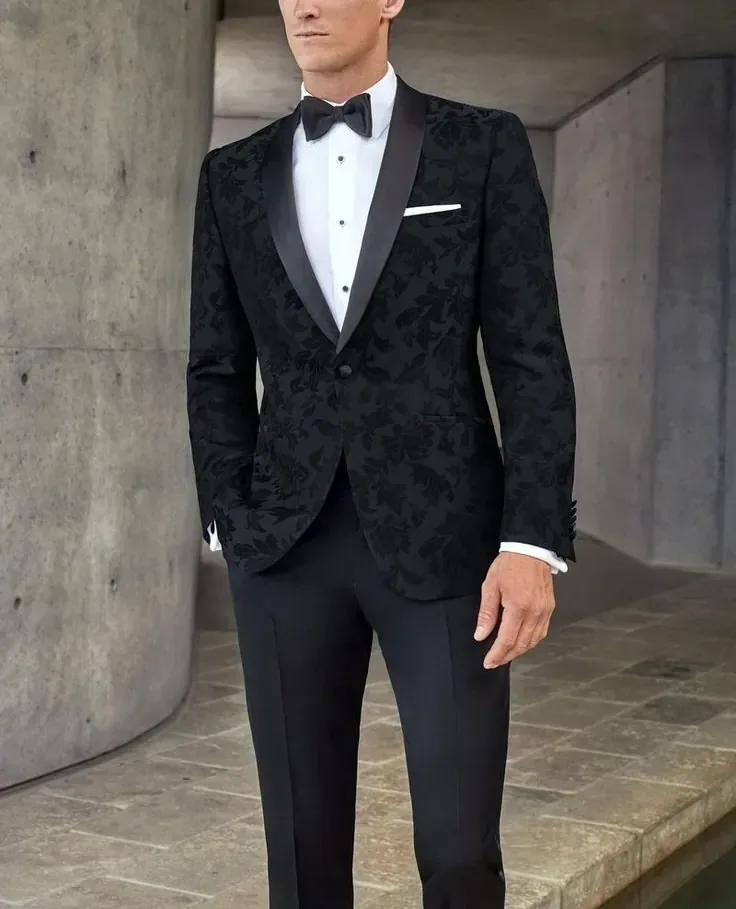
You reach for the tuxedo the night before the event and notice the faint trace of cologne along the lapel. The garment still looks sharp from across the room, yet that small mark is enough to make you wonder whether it will survive another round of cleaning without losing its line.
Why Tuxedos Demand More Restraint Than Ordinary Suits
A bespoke tuxedo is built with the same floating canvas construction found in the finest day suits. A bespoke suit has a floating canvas hand-stitched to the outer cloth. Press it wrong — too much heat, too much steam — and that canvas buckles permanently. The difference with evening wear is the silk facing and the higher expectations placed on the finish under bright lights and camera flashes.
Most commercial cleaners apply the same cycle they use for business suits. The result is a gradual softening of the chest piece and a shine that appears first on the lapels, then across the trousers. Clients in Atherton who maintain multiple evening ensembles notice the change after only two or three cycles when the garment no longer drapes the way the cutter intended.
The Protocol That Protects the Canvas
Alex's Team begins every tuxedo with a targeted pre-spotting pass using the mildest solvent appropriate for the fiber and the stain. No full immersion occurs until the garment has been examined under both natural and raking light. Only then is a short, cool cleaning cycle selected—never the standard aggressive setting.
After cleaning, the pressing sequence is deliberately light. The jacket is steamed from the inside first, allowing the canvas to relax without direct pressure on the wool face. The silk lapels receive only the gentlest touch-up with a padded cloth, never a hot iron. Trousers are finished on a tension-free press that preserves the original break and avoids crushing the satin stripe.
Every seam is checked afterward for any sign of puckering. If the floating canvas has shifted even slightly, the jacket is re-steamed by hand rather than run through another machine cycle. This level of inspection is what separates garments that still look new after five years from those that quietly lose their shape.
When your calendar includes several black-tie evenings each season, the difference shows up in small, consistent details rather than dramatic failures.
Schedule a Pickup →The Hidden Cost of Inconsistent Care
Founders and managing partners rarely have time to monitor every garment. Yet one poorly pressed tuxedo on an important evening creates the kind of low-grade distraction that follows you through the room. The alternative is a service that treats each piece according to its actual construction rather than a generic checklist.
Alex Najafi founded Alex's Dry Cleaning Valet in 1984 and has operated it personally ever since. That continuity means the same inspection standards travel with every pickup, whether the tuxedo is heading to an Atherton residence or returning from one. Clients who have relied on the service for more than two decades report that their evening wear still fits and photographs the way it did when first delivered.
Questions about the specific handling of vicuña accents, beaded details, or structured evening tailoring are common. The answers for garment care questions are collected here: the best dry cleaning in Atherton.
The garments that matter most are the ones you reach for without thinking. When the cleaning protocol respects the floating canvas and the silk facing, the tuxedo remains ready for the next occasion without requiring any second thought from you.